




We’re here to assist you! For any inquiries, support, or collaboration opportunities, feel free to reach out through phone, email, or our social channels. Our team will connect with you at the earliest.
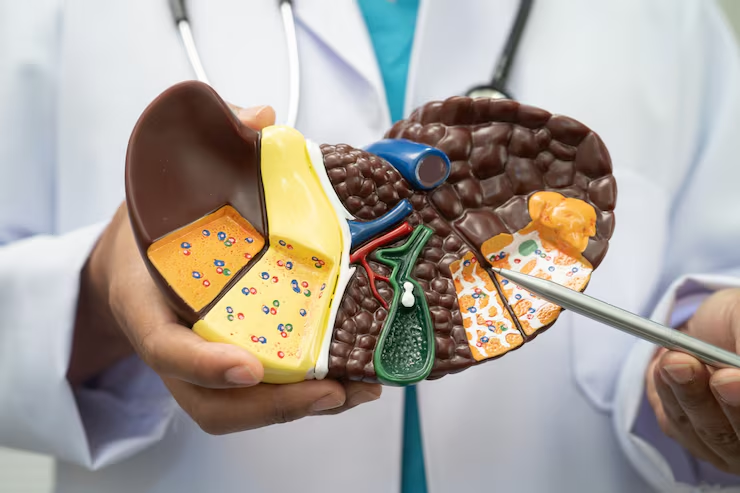
Fatty liver is often marketed as something to “detox.” Modern evidence tells a very different story: improving MASLD means addressing energy balance, diet quality, physical activity, metabolic health and—when appropriate—weight, not cleansing the liver with juices, teas or supplements.
“Drink this juice to cleanse your liver.”
“Stop eating all fat.”
“Take a liver detox supplement.”
“Avoid fruit because fructose causes fatty liver.”
“Lose weight as quickly as possible.”
A diagnosis of fatty liver often triggers an unusual kind of nutrition advice.
People begin searching for foods that will “clean the liver” rather than asking why fat accumulated there in the first place.
That distinction matters.
What was traditionally called non-alcoholic fatty liver disease (NAFLD) is now largely described as metabolic dysfunction-associated steatotic liver disease (MASLD) under the newer nomenclature.[1,2]
The terminology changed for several reasons, but one benefit is immediately obvious:
MASLD frequently travels with insulin resistance, abdominal adiposity, type 2 diabetes, abnormal blood lipids and cardiovascular risk.[1]
So the most useful nutrition question is not:
“Which food cleans fatty liver?”
It is:
“What changes the metabolic environment that allowed excess fat to accumulate in the liver?”
That question leads to very different—and much more evidence-based—care.
Steatotic liver disease refers to excess fat accumulating in the liver.
Under the newer classification, MASLD is diagnosed in the setting of hepatic steatosis together with at least one cardiometabolic risk factor, while the broader classification also accounts for alcohol exposure and other causes of liver disease.[1,2]
Some people have predominantly steatosis.
Others develop metabolic dysfunction-associated steatohepatitis (MASH), where steatosis is accompanied by inflammation and liver-cell injury.
Over time, some individuals develop fibrosis—scar tissue within the liver.
Fibrosis can progress toward cirrhosis and its complications.
This is why the phrase “just fatty liver” can be misleading.
Not everyone with MASLD will develop advanced liver disease.
But the clinical objective is not merely to know whether fat exists.
The 2024 EASL-EASD-EASO clinical practice guideline therefore emphasizes case-finding and fibrosis assessment in people at increased risk, particularly those with type 2 diabetes, abdominal obesity plus additional metabolic risk factors, or persistently abnormal liver enzymes.[1]
MASLD should not be viewed only through the liver.
It frequently coexists with:
insulin resistance,
type 2 diabetes,
obesity or central adiposity,
high triglycerides,
hypertension,
and atherogenic dyslipidaemia.
Cardiovascular disease is a major cause of illness and death among people with MASLD.[1,3]
That changes what “successful treatment” should mean.
A diet that lowers liver enzymes slightly but worsens LDL cholesterol, promotes muscle loss or cannot be maintained is not an ideal MASLD intervention.
The nutritional objective is broader:
improve liver health while improving overall metabolic and cardiovascular health.
For people with overweight or obesity, weight reduction is one of the best-supported interventions for improving MASLD.
But the effect is not all-or-nothing.
The 2024 European guideline describes a useful dose-response framework: sustained weight loss of more than 5% can reduce liver fat; approximately 7–10% can improve liver inflammation; and more than 10% may improve fibrosis.[1]
These are therapeutic targets—not guarantees.
Individual responses differ, and larger weight loss is not automatically appropriate for every patient.
A landmark prospective study of lifestyle-induced weight loss in people with biopsy-confirmed steatohepatitis found increasingly greater histological improvement as weight loss increased.[4]
This helps explain why weight management receives so much attention in MASLD care.
But there is an important second message:
The goal is not simply losing kilograms. It is improving the metabolic condition of the liver while preserving health and lean tissue.
Crash diets are not the standard.
Sustainable treatment is.
MASLD can occur in people without obesity.
This is sometimes described as lean MASLD, although body mass index alone cannot reveal visceral or ectopic fat.
This is particularly relevant in populations—including many South Asians—where metabolic risk can occur at comparatively lower BMI levels.
A lean person with MASLD should not automatically be placed on aggressive weight-loss treatment.
Instead, clinical attention may need to focus on:
waist circumference and visceral adiposity,
diet quality,
physical activity,
muscle mass,
glucose regulation,
lipids,
and other metabolic risk factors.
This is another reason MASLD treatment must be individualized.
Fatty liver is not simply a body-weight diagnosis.
The Mediterranean dietary pattern is among the most consistently recommended approaches for MASLD because it aligns liver health with cardiovascular and metabolic health.[1,5]
It typically emphasizes:
vegetables,
fruit,
legumes,
whole grains,
nuts and seeds,
olive oil and other unsaturated-fat sources,
fish,
and relatively less:
refined carbohydrate,
added sugar,
processed meat,
and saturated fat.
Trials have shown that Mediterranean-style dietary interventions can reduce hepatic fat and improve cardiometabolic parameters.[5,6]
But “Mediterranean” should not be interpreted as meaning everyone needs to eat European food.
The metabolic principles travel better than the recipes.
An Indian adaptation could include:
dal, rajma, chana, vegetables, whole grains, nuts, seeds, curd, fish where eaten, moderate amounts of appropriate oils and abundant minimally processed plant foods.
The goal is the pattern.
Not imported ingredients.
This question deserves more nuance than social media usually gives it.
Carbohydrates are not one uniform category.
There is an enormous nutritional difference between:
lentils and cola,
oats and cake,
whole fruit and fruit-flavoured beverages,
whole grains and refined bakery products.
MASLD guidelines emphasize improving dietary quality and limiting sugar-sweetened beverages, added sugars and highly processed foods.[1]
This is especially relevant because excessive intake of rapidly absorbed sugars and excess energy can contribute to hepatic fat accumulation.
But that does not mean everyone with MASLD needs a zero-carbohydrate diet.
Whole grains, legumes, vegetables and whole fruit can remain part of an appropriate dietary pattern.
The clinically useful target is not “carbohydrate elimination.” It is better carbohydrate quality, appropriate quantity and improved overall energy balance.
Fructose has become another word that causes unnecessary fear.
High intakes of fructose-containing added sugars—particularly through sugar-sweetened beverages and excess calories—are relevant to MASLD.
But it is a mistake to treat whole fruit as metabolically equivalent to a soft drink.
An apple provides fructose inside a food matrix containing fibre, water, micronutrients and phytochemicals.
A sweetened beverage delivers sugar rapidly, with little satiety.
So the message should not be:
“Fructose causes fatty liver, therefore stop eating fruit.”
It should be:
Reduce added sugars and sugary drinks while keeping the entire dietary pattern in perspective.
The old idea that fatty liver means dietary fat must be eliminated is too simplistic.
Different fats have different cardiometabolic effects.
The 2024 MASLD guideline favours a dietary pattern lower in saturated fat and richer in unsaturated fats.[1]
That can mean reducing frequent or excessive intake of foods high in saturated fat while emphasizing sources such as:
nuts,
seeds,
fish,
olive oil,
and other appropriate unsaturated vegetable oils.
This matters because MASLD is not just about reducing fat inside the liver.
Cardiovascular risk matters too.
A diet should not improve one metabolic marker while neglecting the heart.
When weight loss is indicated, preserving muscle becomes important.
Severe calorie restriction without sufficient protein and resistance exercise can reduce lean tissue alongside fat mass.
Appropriate protein sources may include:
dal and pulses,
soy and tofu,
curd or yogurt,
paneer in suitable portions,
eggs,
fish,
lean poultry,
and other culturally appropriate foods.
There is no universal “MASLD protein prescription” for every patient.
Needs should be individualized according to age, body size, activity, kidney function and other clinical considerations.
The broader principle is:
When reducing body weight, protect metabolically valuable tissue—not just the number on the scale.
Physical activity should not be presented merely as a tool for burning calories.
Exercise can reduce liver fat and improve cardiometabolic fitness even without dramatic changes in body weight.[1,7]
Both aerobic exercise and resistance training can be useful.
Walking, cycling, swimming and other aerobic activities improve cardiorespiratory health.
Resistance training helps preserve or build skeletal muscle—an important site of glucose disposal.
The 2024 European guideline recommends physical activity tailored to the person’s ability and preferences, generally favouring more than 150 minutes per week of moderate-intensity activity or 75 minutes per week of vigorous activity.[1]
The most effective exercise is not necessarily the one that burns the most calories in one session.
It is the one that can become part of life.
Coffee occupies an interesting place in liver research.
Observational evidence has repeatedly associated coffee consumption with lower risk of liver fibrosis and adverse liver outcomes.[3,8]
But this does not mean coffee is a treatment equivalent to weight management or metabolic care.
And adding large amounts of sugar, syrups or cream changes the nutritional context.
For adults who already tolerate coffee and have no contraindication, moderate unsweetened or minimally sweetened coffee can fit within a healthy dietary pattern.
It should not be sold as a “liver cleanse.”
The relationship between alcohol and metabolic liver disease is complex.
Current MASLD guidance does not support encouraging alcohol consumption for liver health.[1]
Alcohol exposure should be assessed as part of liver evaluation because metabolic risk and alcohol-related liver injury can coexist.
For people with advanced fibrosis or cirrhosis, alcohol avoidance becomes particularly important.
The correct advice therefore depends on:
amount, frequency, liver-disease severity, medications and overall health.
Someone diagnosed with MASLD should discuss alcohol consumption with the treating clinician rather than assuming that a daily drink is cardioprotective or harmless.
The supplement aisle is full of products claiming to:
detox the liver,
regenerate liver cells,
melt liver fat,
or flush toxins.
Evidence is far less dramatic.
Vitamin E has been studied in selected patients with steatohepatitis, but it is not a universal supplement for everyone with MASLD. Patient selection, potential risks and clinical context matter.[3]
Omega-3 supplementation can reduce triglycerides and may influence liver fat in some studies, but it is not established as a stand-alone treatment for MASH or fibrosis.[3]
The gut-liver axis is an active research area, but probiotic formulations and trials vary substantially. Evidence does not justify treating probiotics as primary MASLD therapy.
Despite extensive marketing, evidence is insufficient to position milk thistle as a replacement for established metabolic treatment.
These deserve particular caution.
“Natural” does not mean harmless.
Herbal and dietary supplements themselves can cause liver injury.
A liver supplement should never distract from the interventions with the strongest evidence: diet quality, activity, metabolic risk management and appropriate weight reduction.
A three-day juice cleanse may change body weight temporarily.
That is not the same as treating MASLD.
Juices can also deliver substantial amounts of rapidly absorbed sugar while removing much of the fibre found in whole fruits and vegetables.
Detox teas may contain laxatives, diuretics or poorly characterized herbal ingredients.
The liver already performs sophisticated metabolic and detoxification functions.
MASLD is not caused because the liver forgot how to “cleanse.”
It develops through complex metabolic pathways involving energy excess, adipose-tissue dysfunction, insulin resistance, genetics and other factors.
The liver does not need a cleanse. It needs a healthier metabolic environment.
The treatment landscape for obesity, diabetes and MASH has evolved substantially.
Medications that produce meaningful weight loss—including GLP-1–based therapies—may also improve liver-related outcomes in appropriately selected patients.[1]
But this does not make nutrition irrelevant.
When appetite is substantially reduced, attention may become even more important to:
protein adequacy,
fibre,
micronutrient intake,
hydration,
and preservation of muscle.
Medication decisions belong with qualified medical prescribers.
Nutrition care should complement treatment rather than compete with it.
Likewise, metabolic/bariatric surgery may be considered in appropriately selected people with obesity and can produce substantial improvements in metabolic disease and liver histology.[1,3]
It is a medical treatment—not a shortcut.
A useful starting framework is:
Leafy greens, cauliflower, cabbage, beans, gourds, okra, peppers, mushrooms, cucumber, tomatoes or other vegetables.
Dal, beans, chickpeas, tofu, eggs, fish, chicken, yogurt/curd or another appropriate protein.
Whole-grain roti, oats, barley, brown/parboiled rice, millets or another culturally appropriate minimally processed starch.
Add an appropriate amount of unsaturated fat from nuts, seeds or suitable oils.
Whole fruit can form part of the diet.
Water should be the default beverage.
This is not a rigid medical prescription.
It is a practical way to shift meals toward the dietary pattern supported by current evidence.
Breakfast:
Vegetable moong dal chilla with curd
or oats with yogurt, nuts and whole fruit
or eggs/tofu with vegetables and whole-grain toast.
Lunch:
Dal or rajma + generous vegetables + salad + moderate rice/whole-grain roti + curd.
Snack, if required:
Whole fruit + nuts
or roasted chana
or unsweetened yogurt.
Dinner:
Fish/tofu/paneer/lean chicken + cooked vegetables + dal or a moderate whole-grain/starch portion.
Notice what is missing:
No detox juice.
No liver-cleansing tea.
No exotic superfood.
No complete carbohydrate ban.
The therapeutic value comes from the pattern repeated over time.
One clinically important misconception is:
“My ALT and AST are normal, so my fatty liver cannot be serious.”
Liver enzymes alone are not reliable enough to exclude clinically significant MASLD or fibrosis.
Current guidance recommends fibrosis risk assessment using appropriate non-invasive strategies in people at increased risk.[1,3]
Depending on the clinical setting, this may involve tools such as FIB-4, followed where appropriate by elastography or other assessment.
People with type 2 diabetes, multiple metabolic risk factors or suspected advanced disease deserve particular attention.
Nutrition should therefore not become a substitute for appropriate medical evaluation.
Improving the diet and assessing fibrosis are complementary—not competing—parts of care.
MASLD exposes a larger problem in wellness culture.
When a complex metabolic condition is reduced to a single organ, treatment becomes distorted.
Fatty liver becomes:
“a liver problem.”
Then a liver problem becomes:
“a detox problem.”
And a detox problem becomes something supposedly solved by:
a juice, a tea, a supplement or a seven-day cleanse.
That entire chain of reasoning misses the biology.
At The NIND Knowledge Hub, we believe the more useful clinical framework is:
For many people, improving MASLD means improving the system around the liver:
energy balance,
adipose tissue health,
insulin sensitivity,
diet quality,
physical activity,
muscle preservation,
glucose regulation,
blood lipids,
and cardiovascular risk.
This is also why liver fat cannot be the only outcome that matters.
A successful MASLD diet should not merely produce a better ultrasound.
It should help create a healthier person.
Do not ask what “cleans” the liver. Ask what changes the metabolic conditions that caused fat to accumulate there.
That question is less marketable.
But it is far closer to the evidence.
1. MASLD is fundamentally a metabolic health condition—not a detox problem.
Its management should address the liver alongside diabetes risk, adiposity, lipids and cardiovascular health.
2. Fibrosis matters.
The presence and severity of fibrosis are clinically important, and liver enzymes alone cannot reliably rule out significant disease.
3. Weight loss is powerful when excess adiposity contributes to MASLD.
Current guidance suggests progressively greater liver benefits with sustained weight reductions beyond 5%, 7–10% and, for fibrosis improvement, often above 10%—but individual outcomes vary.[1]
4. Not everyone with MASLD needs aggressive weight loss.
Lean MASLD requires attention to body composition, metabolic risk and lifestyle rather than reflexive calorie restriction.
5. Mediterranean-style eating provides a strong evidence-based framework.
Its principles can be adapted to Indian and other cultural diets.
6. Carbohydrates do not need to disappear.
Prioritize legumes, whole grains, vegetables and whole fruit while reducing refined carbohydrates and added sugars.
7. Sugary beverages deserve particular attention.
Liquid added sugars can contribute substantial energy with little satiety.
8. Fat quality matters.
Reduce excessive saturated fat and favour unsaturated fat sources.
9. Exercise is liver therapy too.
Physical activity can improve liver fat and metabolic health even without major weight loss.
10. Detox products are not MASLD treatment.
The evidence supports sustainable metabolic care—not cleanses, teas or miracle supplements.
Research Scholar, Nutrition & Dietetics
Certified Clinical Dietitian
Mumbai, Maharashtra, India
Professional Focus: Clinical Nutrition | Metabolic & Liver Health | Diabetes & Weight Management
Dr. Ayesha Mehta’s professional and research interests include clinical nutrition, metabolic health, liver-related nutrition, diabetes and evidence-informed weight management. Her approach emphasizes translating evolving nutrition science into clinically responsible, practical dietary strategies while moving patients away from restrictive diets and unsupported “detox” narratives.
The NIND Knowledge Hub is the evidence-focused nutrition education and professional knowledge platform of NIND, created to bridge the gap between nutrition research, clinical practice and understandable health information.
Its Clinical Insights examine complex nutrition and metabolic conditions through an evidence-led lens—distinguishing established treatment principles from emerging science, commercial claims and nutritional misinformation.
Evidence interpreted. Nutrition understood. Practice improved.
1. European Association for the Study of the Liver (EASL), European Association for the Study of Diabetes (EASD), European Association for the Study of Obesity (EASO). EASL-EASD-EASO Clinical Practice Guidelines on the management of metabolic dysfunction-associated steatotic liver disease (MASLD). J Hepatol. 2024. PMID: 38851997.
2. Rinella ME, Lazarus JV, Ratziu V, et al. A multisociety Delphi consensus statement on new fatty liver disease nomenclature. Hepatology. 2023;78(6):1966–1986. doi:10.1097/HEP.0000000000000520.
3. Rinella ME, Neuschwander-Tetri BA, Siddiqui MS, et al. AASLD Practice Guidance on the clinical assessment and management of nonalcoholic fatty liver disease. Hepatology. 2023;77(5):1797–1835. doi:10.1097/HEP.0000000000000323.
4. Vilar-Gomez E, Martinez-Perez Y, Calzadilla-Bertot L, et al. Weight loss through lifestyle modification significantly reduces features of nonalcoholic steatohepatitis. Gastroenterology. 2015;149(2):367–378.e5. doi:10.1053/j.gastro.2015.04.005.
5. Ryan MC, Itsiopoulos C, Thodis T, et al. The Mediterranean diet improves hepatic steatosis and insulin sensitivity in individuals with non-alcoholic fatty liver disease. J Hepatol. 2013;59(1):138–143. doi:10.1016/j.jhep.2013.02.012.
6. Properzi C, O’Sullivan TA, Sherriff JL, et al. Ad libitum Mediterranean and low-fat diets both significantly reduce hepatic steatosis: a randomized controlled trial. Hepatology. 2018;68(5):1741–1754. doi:10.1002/hep.30076.
7. Keating SE, Hackett DA, George J, Johnson NA. Exercise and non-alcoholic fatty liver disease: a systematic review and meta-analysis. J Hepatol. 2012;57(1):157–166. doi:10.1016/j.jhep.2012.02.023.
8. Wijarnpreecha K, Thongprayoon C, Ungprasert P. Coffee consumption and risk of nonalcoholic fatty liver disease: a systematic review and meta-analysis. Eur J Gastroenterol Hepatol. 2017;29(2)–e12.
9. Romero-Gómez M, Zelber-Sagi S, Trenell M. Treatment of NAFLD with diet, physical activity and exercise. J Hepatol. 2017;67(4):829–846. doi:10.1016/j.jhep.2017.05.016.
10. Chalasani N, Younossi Z, Lavine JE, et al. The diagnosis and management of nonalcoholic fatty liver disease: practice guidance from the American Association for the Study of Liver Diseases. Hepatology. 2018;67(1):328–357.
This article is intended for educational and professional-information purposes only and does not constitute individualized medical, nutrition or liver-disease treatment advice.
MASLD ranges from uncomplicated steatosis to inflammatory liver disease, advanced fibrosis and cirrhosis. Appropriate medical evaluation—including assessment of metabolic risk and, where indicated, non-invasive fibrosis testing—is important.
Individuals with diabetes, advanced liver disease, kidney disease, pregnancy, significant alcohol intake or other medical conditions should seek individualized advice before making major dietary changes.
Do not begin vitamin E, herbal “liver” products, weight-loss medicines or other supplements or medications specifically for MASLD without appropriate clinical guidance. Supplements can interact with medicines and, in some circumstances, can themselves cause liver injury.
Published by The NIND Knowledge Hub
Clinical Insight | Clinical Nutrition
Author: Dr. Ayesha Mehta
Research Scholar, Nutrition & Dietetics | Certified Clinical Dietitian
Mumbai, Maharashtra, India
Evidence • Nutrition • Clinical Practice • Professional Growth


Get the latest nutrition insights, research updates & wellness tips delivered to your inbox.
No spam. Unsubscribe anytime.Secure your spot in this session
Secured by Razorpay